
Marketing Sees a New Livery. Ops Sees Missing Aircraft.
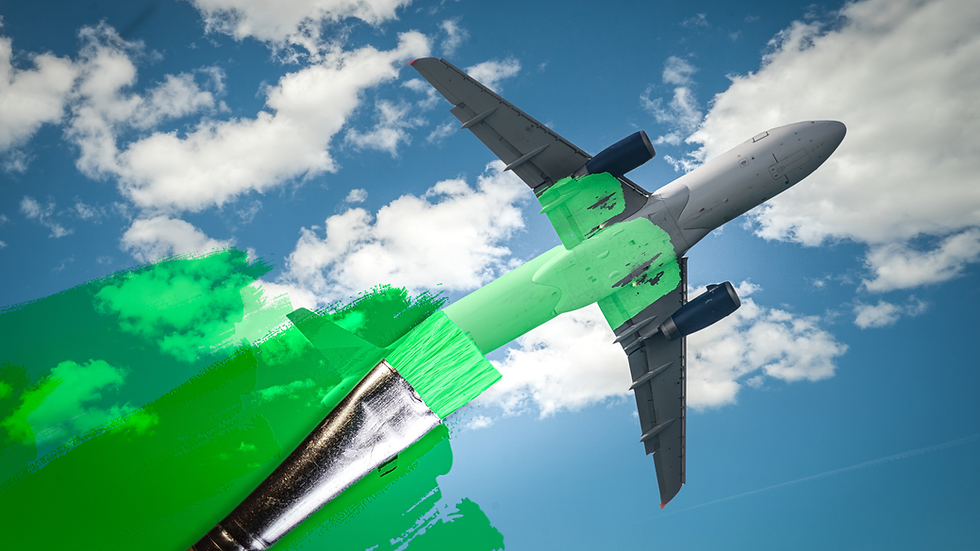
Aircraft liveries are among the most visible elements of an airline's brand, turning aircraft into flying advertisements seen by millions of passengers each year. However, behind every new paint scheme lies a complex project involving design teams, engineers, maintenance planners, and operations staff, all working to balance branding ambitions with aircraft availability, regulatory compliance, and commercial realities.
Published: 21 August 2026
Written by: Shashwat Dwivedi
Who doesn't like a new paint job on their car, or perhaps on an aircraft? The idea of a new livery on a pristine-looking airliner is always exciting. For onlookers, it is a major brand moment, but the people sitting in operations and planning are probably this close to punching the wall beside them in frustration because of what a new livery means for them.
To put it bluntly, it represents a revenue-generating asset being taken out of service for a period of time.
A livery is not just paint. It is a deeply ingrained part of an airline's identity and plays a role in compliance, protection, and marketing.
Jessica Lee, Cathay's Head of Brand and Content, said:
"The livery is an opportunity to reinforce our identity as a premium airline."
The airline describes its livery as the most visible marketing asset available to it, turning the aircraft into a literal flying advertisement. As Business Insider has described them, aircraft are essentially flying billboards.
Design teams begin working on livery concepts long before an aircraft enters the paint shop. These teams work closely with livery manufacturing specialists, producing small-scale test models to evaluate how a proposed design will look. Concepts are also rendered on three-dimensional digital models to provide greater clarity.
A livery is a large part of the emotion an airline is trying to convey, but it must first respect the geometry of the aircraft. Virgin Atlantic notes that designs are modelled digitally in three dimensions so teams can test how colours, lettering, and graphics behave across curved aircraft surfaces while still meeting technical, safety, and regulatory requirements.
The livery also provides multiple layers of protection against the wear and tear associated with moving through the atmosphere. Marketing sees colour. Engineering sees adhesion, corrosion protection, layer compatibility, masking, solvent behaviour, and inspection criteria.
As attractive as new paint schemes may be, Virgin Atlantic notes that the painting process can take anywhere from 8 to 20 days. Cathay often aligns repainting schedules with major maintenance events, typically every six to seven years. Nobody wants a special livery badly enough to explain an avoidable aircraft shortage during a busy operational period.
Painting is only part of the process. With as much as 1,400 kg of paint used on an Airbus A330, drying alone can take several days, during which the aircraft remains unavailable for service. During this period, critical markings such as door outlines, warnings, and operational labels must also be repainted or reapplied in accordance with regulatory requirements concerning size, contrast, and placement.
Special liveries have become celebrities in their own right. According to Business Insider, Turkish Airlines recently celebrated the arrival of its 500th aircraft, an Airbus A350, with a special livery featuring 100,000 employee faces across the aircraft. The project reportedly took around a year to develop, but the marketing value and attention it generated for the airline made the effort worthwhile.
Applying a livery is not simply about branding. It is also about aircraft utilisation, timing, maintenance planning, and operational availability. Long before the first coat of paint is sprayed, a significant amount of work has already gone into ensuring the design can achieve both commercial and operational objectives.
Key Facts
A new livery transforms an aircraft into a flying billboard, reinforcing airline identity and brand visibility.
Designing a livery involves digital modelling, technical reviews, engineering considerations, and regulatory compliance.
Liveries provide protective coatings as well as visual branding.
Aircraft repainting can take between 8 and 20 days, depending on the project.
Airlines often align repainting schedules with planned maintenance to reduce operational disruption.
Special liveries can generate significant publicity and marketing value for airlines.
Operations departments must balance branding objectives with aircraft availability and commercial demands.
Related Articles
Planning growth, fleet changes or seasonal operations in 2026? Contact Brookfield to discuss your staffing and consultancy needs. Email: info@brookfieldav.com
Explore our full range of recruitment services, connecting aviation businesses with skilled pilots, aircraft engineers and industry professionals worldwide.
Author: Shashwat Dwivedi Aviation staffing and consultancy insights LinkedIn


